Introduction :How to Store Baby Walkers in Small Homes
Let’s face it: living in a small home is cozy, but when you throw a bulky baby walker into the mix? It starts to feel like a game of Tetris gone wrong. If you’re constantly bumping into baby gear or shoving walkers behind doors, this article is your life-saver.
We’re diving into clever, practical, and modern ways to store baby walkers—without losing your sanity (or floor space). Whether you’re in a 1BHK apartment, a rented home, or a studio, these 2025 tips will help you reclaim your space.
Why Storage is a Big Deal in Small Homes
Small homes are charming, but every square foot counts—especially when there’s a crawling (and soon walking!) baby around. Baby walkers are one of those must-haves that often don’t fold down easily or fit neatly into standard storage.
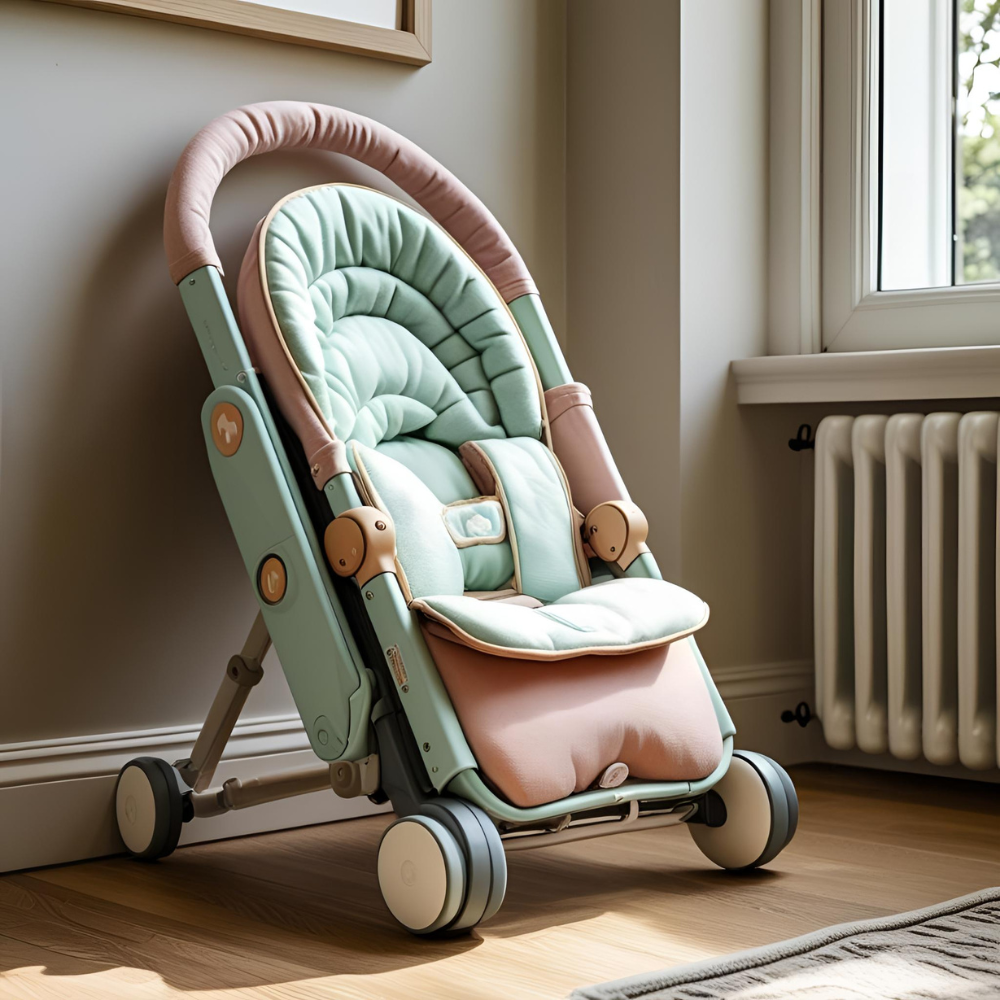
If you’re planning to buy a walker that won’t clutter your home, check out our picks for the Best Foldable Baby stroller for Small Spaces 2025 they’re compact, travel-friendly, and made with small apartments in mind.
Types of Baby Walkers and Their Storage Challenges
When most parents invest in a baby walker, features regarding safety, toys, and design are the main considerations-and few people think about storage. Once your baby grows big and you have piles of toys, mats, and clothes everywhere, storage is a major issue. Let’s look at the most common types of baby walkers and see what makes each one easy-or not so easy-to store.
1.Traditional Seated Walkers
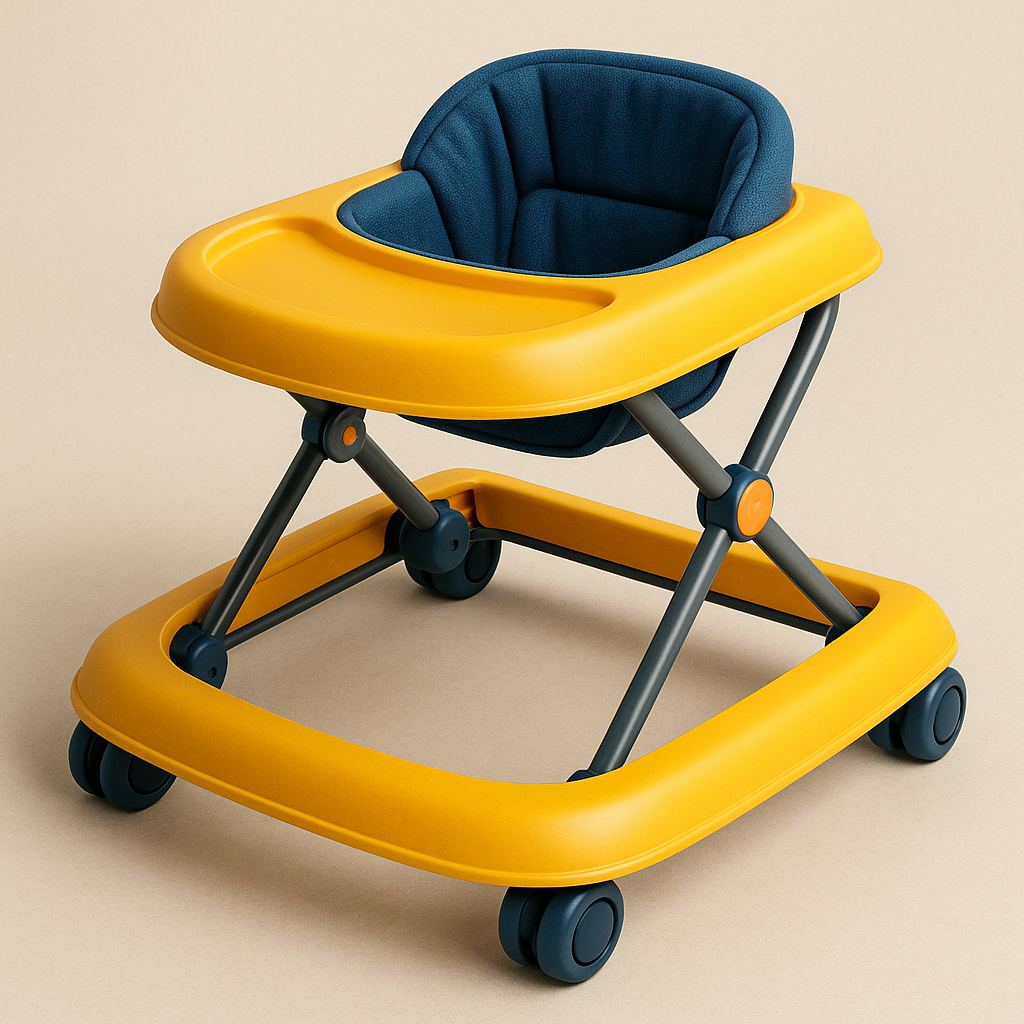
These are the classic models that most parents recognize: a rounded or oval-shaped base with wheels and a soft fabric seat at the center. Babies can sit inside, push off with their legs, and move freely. These kinds of walkers work great for entertainment and early mobility, but they are the bulkiest of the bunch, too. The wide base prevents them from tipping and provides stability, but it’s hard to fit into closets or under furniture. Most of the older or low-budget models do not have foldable frames, meaning they take up a fixed amount of space even when not in use. For families in apartments or smaller homes, that is a real storage headache.
2.Push Walkers
Push walkers are designed more like a mini shopping cart or baby trolley. They are designed for babies to stand behind and push as they walk. Generally, they are much lighter, slender, and easy to maneuver because they don’t have an integrated seat or wide frame. Some models fold flat, or have detachable toy panels, which makes storage simpler. Not all push walkers fold, though-so you may well still need to find a dedicated corner to park them, depending on the brand.
3.Convertible Walkers
Convertible walkers are the modern multitaskers-most will convert into an activity centre, a rocker or a ride-on toy. Great for long-term use but often come with more parts and attachments which can make them fiddly to dismantle or store neatly. If space is at a premium these may require some advance planning before purchase.
Smart Storage Starts with Smart Shopping
Think ahead to when you won’t be able to take a step without stepping over toys and baby gear everywhere. The smartest way to manage space is by choosing the right kind of walker right from the very beginning. Not all walkers are the same, and some have been designed with modern homes and compact living in mind. If you live in an apartment or just like to keep your space clutter-free, investing in space-saving baby walkers can make all the difference.
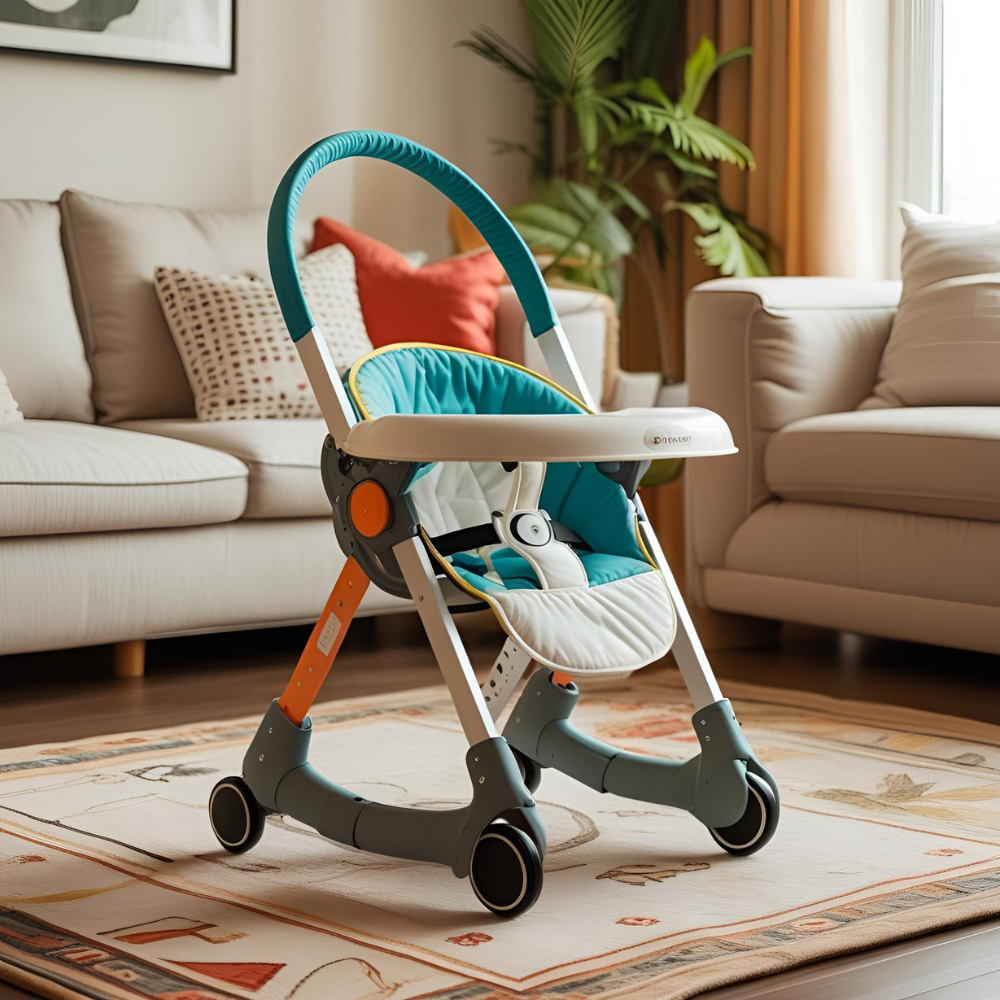
Foldable Walkers: Your Best Friend
If you’re going to buy a walker for 2025, make sure it’s foldable. Most modern designs boast one-click folding mechanisms that let you fold up the walker in a couple of seconds sans any tools or equipment. Folding, the walkers easily slide under the bed, fit behind doors, or even stand upright in a corner. Other high-end designs fold down into suitcase-sized bundles, ideal for travel or storage in tiny apartments. Beyond saving space, foldable walkers also make cleaning and transport a breeze-perfect for busy parents who want both function and flexibility.
Multi-Purpose Walkers: 2-in-1 Solutions
Multi-functional walkers that easily convert into rockers, activity tables, or even push toys are today’s trend in the baby gear market. These 2-in-1, or even 3-in-1, designs offer more choices for playing while taking less space. Instead of different pieces, one well-designed product can cover most of the stages in your baby’s growth. Less stuff is less clutter, less expenditure, and more convenience-a true win for minimalist parents and small-space living alike.
Top 10 Space-Saving Storage Ideas for Baby Walkers
1.Fold and Slide Under the Bed
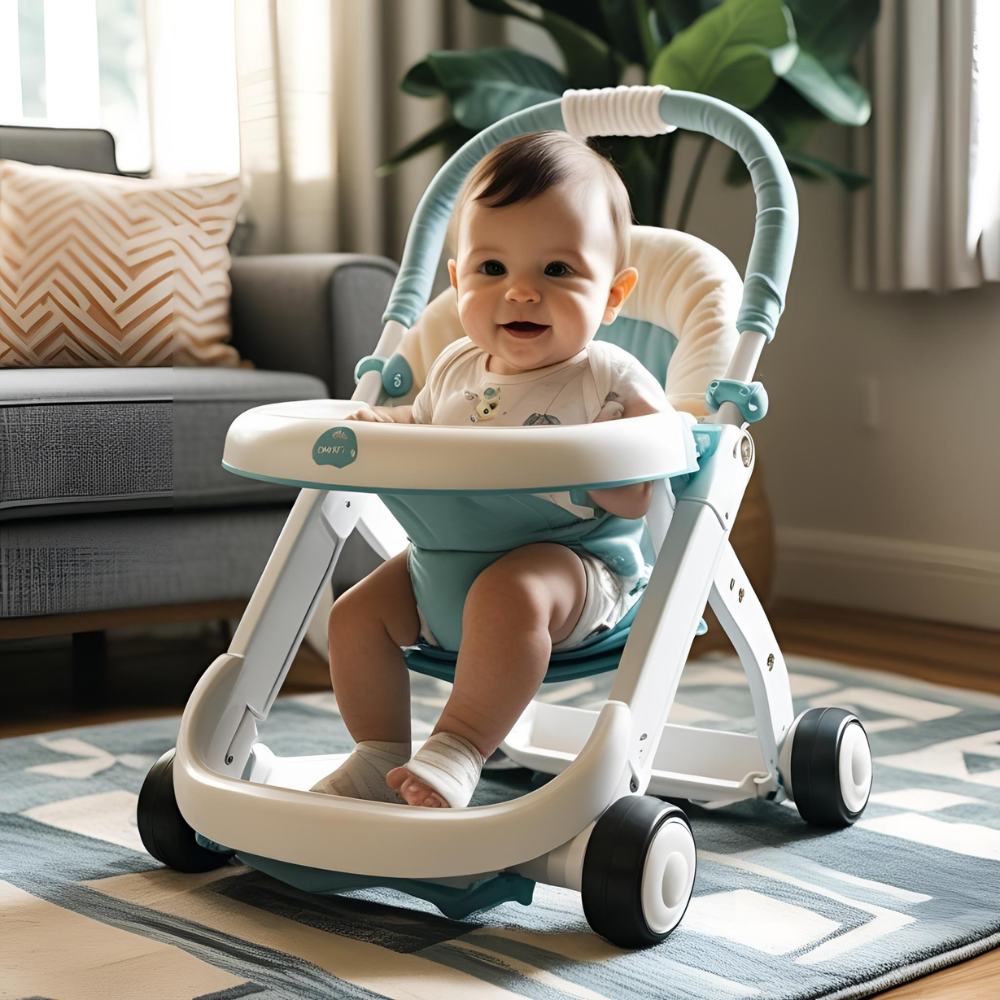
This is the golden rule for small homes. Allow your baby walker to fold, if it does, and slide it under your bed, crib, or sofa when not in use. Most modern foldable walkers are designed to assume a slim profile when collapsed, so they fit into narrow spaces with ease. Use a dust cover or even a large garbage bag in order to protect it from dust and moisture. For extra organization, label said cover with a tag so that when you need it, you can swiftly grab it. It works best for parents who use the walker on occasion and want it tucked out of the way.
2.Utilize Vertical Space: Wall-Mounted Hooks
Don’t look down on your walls; they are valuable storage real estate. Mount two heavy-duty wall hooks in your balcony, hall, or utility corner, and hang the walker by its handle or frame. This keeps the floor free and the walker easily accessible. Choose rust-proof metal hooks that can handle the walker’s weight, and always make sure the hooks are firmly drilled into the wall.
3.Hang Behind Doors
You can easily hang a lightweight push walker on an over-the-door rack. This is one of the simplest ways to store it without taking up extra space or drilling. It’s ideal for apartment living or shared rooms; just hang it behind a closet or nursery door, and you’re done.
4.Overhead Loft Storage
If you have a loft, attic, or ceiling-height cupboard, store your walker in it during long breaks—like once your baby outgrows it. Place it in a labelled storage bin or zippered bag to protect it. It’s completely out of the way but easy to find when you need it for the next baby—or to donate later.
5.Baby Gear Organizer Racks
So, if one is tired of tripping over baby gear, then an organizer rack would be the most excellent investment. These tall, narrow racks are designed to hold strollers, walkers, and even baby bouncers in one place. Most new models feature adjustable shelves, hooks, and wheels, making them perfect to fit compact apartments. You can dedicate one section for the walker and use the rest for toys or folded play mats. It’s a neat, vertical solution that keeps everything accessible while saving a ton of floor space. Place the rack in your balcony, hallway, or utility area for easy access without cluttering your main rooms.
6.Use the Wardrobe Base
With a modular or sliding-door wardrobe, the bottom shelf is often left free or used for odd storage. That is an excellent place to put a folded walker: just slide the walker into the base section-ideally in some kind of protective bag to avoid any scratches or dust. It keeps the walker hidden yet easy to reach when you need it again. For added convenience, label that section so you always know where it is, even months later.
7.Hidden Bench Storage
The storage bench is pure genius-a two-in-one furniture idea. You can sit on it in your hallway, nursery, or balcony, while storing the walker right inside. Most benches have either a lift-up lid or drawers underneath where you can tuck the walker away if guests come over. Choose from sturdy wooden ones or cushioned ones that will blend with your décor. Stylish, functional, and baby-gear-friendly, it’s a perfect blend of comfort and practicality.
8.Balcony or Utility Corner
Your balcony or utility area can be your savior if you stay in a compact home or apartment. These nooks and corners often have just enough room to fit items like walkers when not in use. Keep the walker good as new by covering it with a waterproof dust cover or a large piece of cloth. If the balcony happens to be semi-open, try storing it inside a plastic storage bin or even a weatherproof bag to avoid moisture or rust, or fading in sunlight. You can even label that container so you’ll easily find it later on. This is a great way to keep your indoor space tidy while keeping your baby gear at hand.
9.Car Trunk as a Storage Option
If your baby does not use the walker daily, then the trunk of your car can act as extended storage for it. It will be pretty helpful during visits to the grandparents, journeys, and at some weekends away. Just fold the walker, wrap in cloth or protective cover, and lay it flat inside the trunk. It is out of the way but ready whenever you may need it. Just make sure that you do not load your trunk with other heavy stuff which could press against the walker.
10.Overhead Garage Storage (if applicable)
This is ideal for long-term storage in a garage or small shed. Make sure to install either a wall-mounted rack, a ceiling hook system, or a pegboard setup where the walker could be hung from the ground. By keeping it high, the device is safe from moisture, dirt, or pests, and such storage saves up precious floor space for other essential items. That is a very practical hack, meant to be long-lasting for keeping your baby gear in order and ready at hand.
Decluttering and Rotation: The Minimalist Hack
Switch Gear According to Stage of Development
One of the best ways to keep your home organized is by rotating your baby gear based on what stage your little one is in. Not every toy, not every walker, needs to be accessible at every moment. For instance, if your baby has moved on from using the walker this week, store it away nicely and bring out something more appropriate-like a play gym or stacking blocks. This not only saves space but also keeps your baby more engaged, since rotating toys and equipment adds novelty and stimulation. Babies love exploring “new” things, even if it’s just something they haven’t seen in a while.
Donate, Sell, or Reuse Strategically
Fast-growing, and equally fast-changing needs, means equally changing gear around the house. The moment your baby outgrows the walker, do not let it be in some corner of some room gathering dust. Sell it online on OLX, Facebook Marketplace, or Quikr, give it to a local NGO or parenting group, or even store it at a relative’s home for the next baby in the family. This approach keeps space clear while helping another family who could well do with it.
Storage Accessories Worth Investing In
Sometimes, the right organizing tools make all the difference. Invest in foldable storage bins, zippered dust covers, adjustable racks, or under-bed organizers. These relatively simple accessories can completely transform how efficiently you store baby gear. A little smart purchasing upfront can save you literally hours of cleaning, rearranging, and searching later on.
Heavy-Duty Hooks and Wall Brackets
When floor space is limited, vertical storage is to the rescue. You can safely hang baby walkers, push toys, and other bulky gear off the ground using heavy-duty hooks or wall brackets. Find hooks made of industrial grade or stainless steel, which hold a minimum of 10–15 kg of weight. Mount them in wall studs, not just plaster for safety, and work great behind doors, in balconies, garages, and utility areas. Always check that the hook is secure before hanging anything, especially heavier walkers.
Dust Covers or Zip Bags
If you plan to store the walker for weeks or months, then dust protection becomes vital. A simple dust cover, zippered storage bag, or even a large cotton sheet will protect it from dust, moisture, and pests. This is most practical in Indian homes where humidity could invite mildew or even rust. Go for cloth covers rather than plastic; cloth does not allow odor buildup. You can slip in a small silica gel pouch or even a natural moisture absorber for added freshness.
Safety first: Baby-proof your storage spots
No matter how creative you get with storage, safety will always come first. Where possible, avoid placing them very high on unstable shelves or near any places they might fall or tip over. Where you do hang them on the wall, make sure installation is wholly out of your child’s reach and securely fastened. Cushion all cords, hooks, and sharp edges. Of course, a neat home is one to be proud of, but most importantly, your baby’s safety.
You don’t want the gear meant to keep your baby safe turning into a hazard.
FAQs – How to Store Baby Walkers in Small Homes
1. Can I store baby walkers outside on the balcony?
Yes, but make sure it’s covered and protected from dust, rain, and sunlight. Use a weatherproof cover or large plastic bin.
2. What’s the best walker type for small spaces?
Foldable push walkers or compact convertible walkers are ideal. They take up less space and are easier to store.
3. How often should I clean stored walkers?
If it’s in long-term storage, clean every few weeks or when you bring it back into use. Use mild baby-safe cleaners.
4. Can I hang a baby walker on a regular wall hook?
Only if the hook is heavy-duty and securely installed. Test the weight limit first to avoid accidents.
5. Is it worth buying a storage rack just for baby gear?
Absolutely. A vertical rack can hold walkers, strollers, and other essentials while keeping your floor clear.